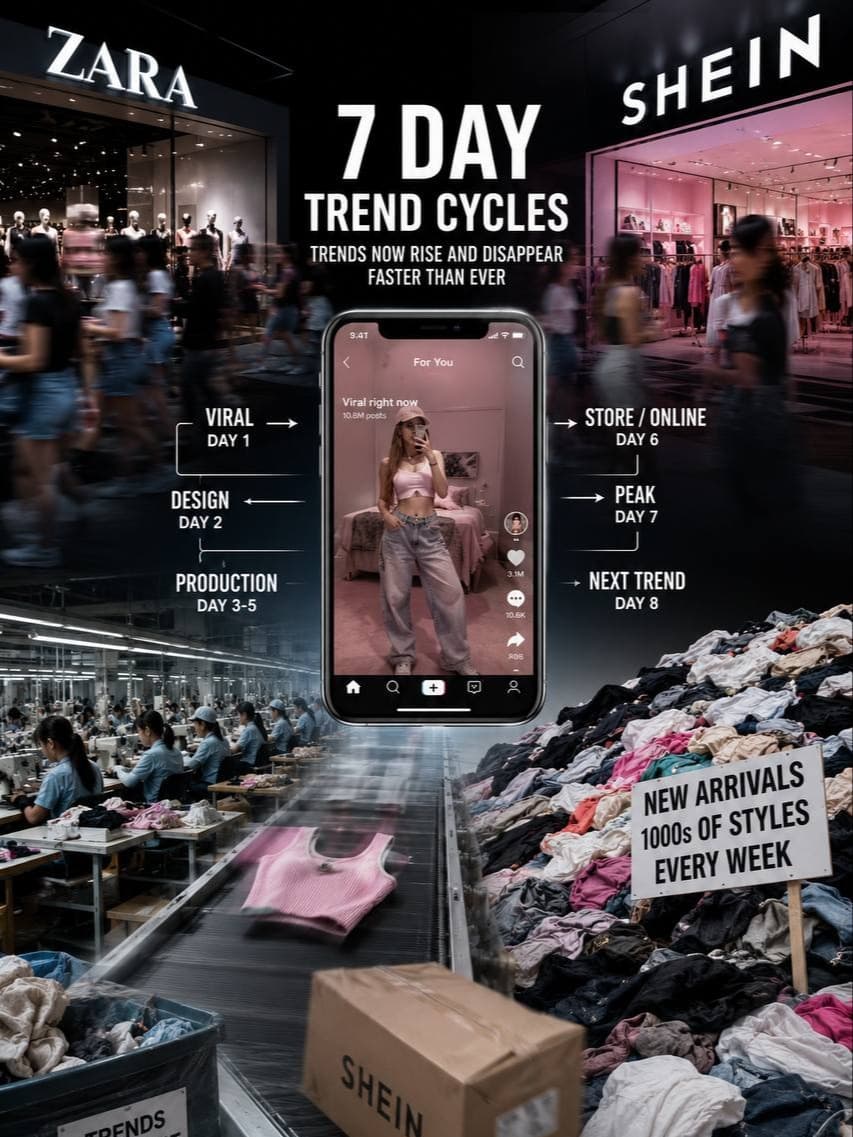
Zara and Shein are reshaping the global fashion industry by accelerating trend cycles to unprecedented speed in 2026.
What once lasted an entire season can now disappear within a single week. Both companies rely on real time consumer data, social media analytics, and ultra fast production systems to react instantly to viral aesthetics and online demand. As trends emerge on TikTok and Instagram, products are designed, manufactured, and released at record speed.
This is changing how fashion operates.
Collections are no longer planned only months in advance. Brands increasingly adapt in real time, treating fashion more like digital content than traditional design. The impact is visible across the industry.
Consumers are exposed to constant aesthetic shifts, while influencers and celebrities move rapidly between trends to maintain visibility and engagement. This acceleration creates pressure on luxury brands as well. Traditional fashion houses built around seasonal calendars are struggling to compete with platforms capable of launching new products weekly.
Critics argue that this model increases waste and weakens originality. Supporters claim it reflects the reality of modern consumer behavior. Either way, the structure of fashion is changing. In 2026, trends no longer evolve slowly.
They explode, peak, and disappear almost instantly.