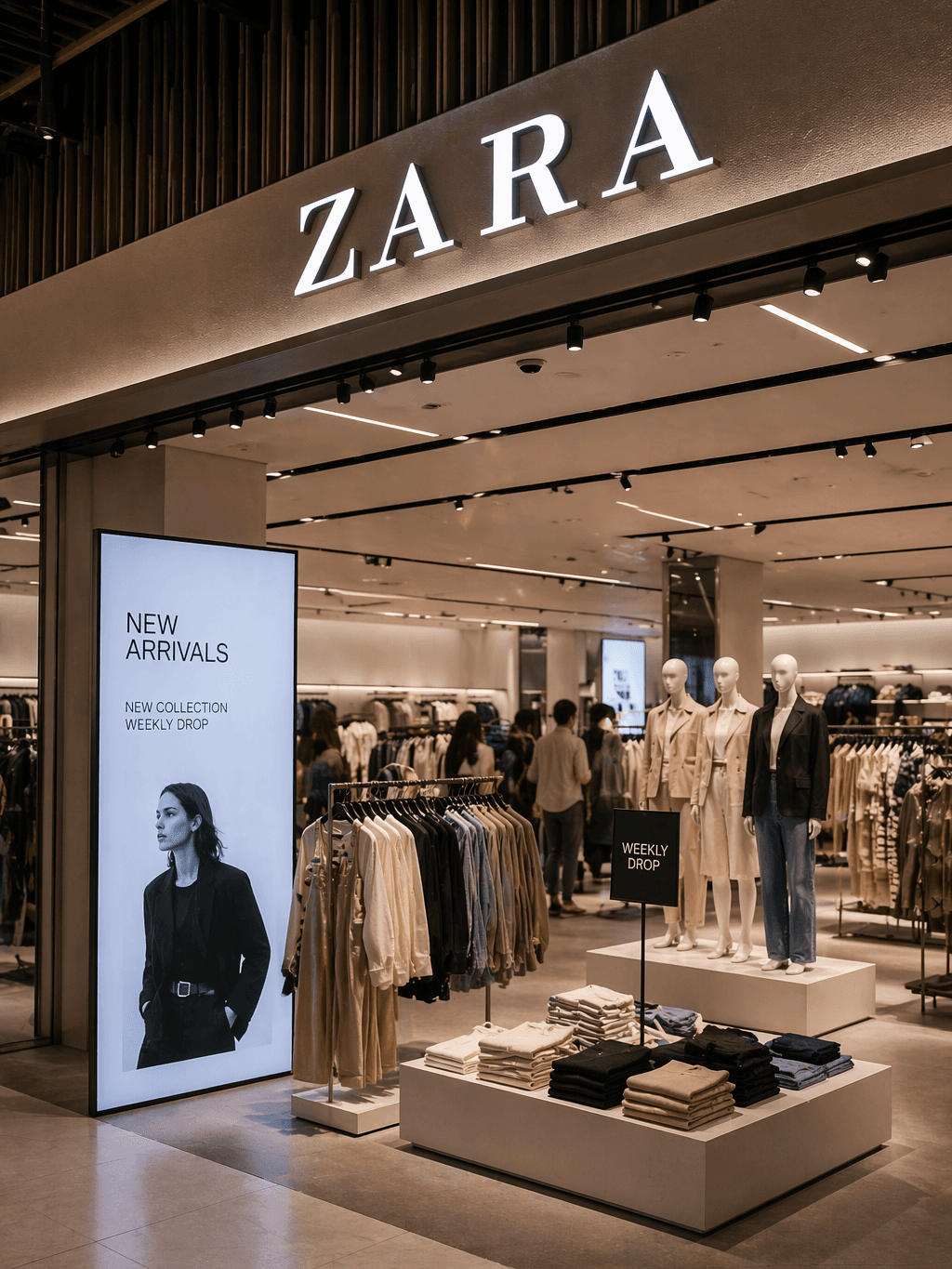
Zara is pushing the boundaries of fast fashion in 2026 by accelerating its production cycles and increasing the frequency of new product drops.
The brand is moving toward a model where collections are no longer seasonal. Instead, new items are introduced weekly, allowing Zara to respond almost instantly to emerging trends and consumer demand. This shift is powered by data. Zara analyzes customer behavior, sales patterns, and digital engagement to decide what to produce next. As a result, the brand can adapt faster than traditional fashion houses and stay aligned with real time preferences.
The strategy positions Zara between classic fast fashion and digital native brands. It combines physical retail infrastructure with speed and flexibility typically seen in online first companies. However, this acceleration also raises concerns. Industry experts question the long term sustainability of such a model, both environmentally and economically. Producing more, faster, and more frequently puts pressure on supply chains and increases waste.
At the same time, consumer expectations are changing. Audiences are used to constant updates of content and products. Fashion is becoming part of a continuous cycle rather than a structured calendar. Zara is not just following this shift. It is actively shaping it. The key question now is whether speed will continue to define success in fashion, or whether the industry will move toward more balanced and sustainable models.