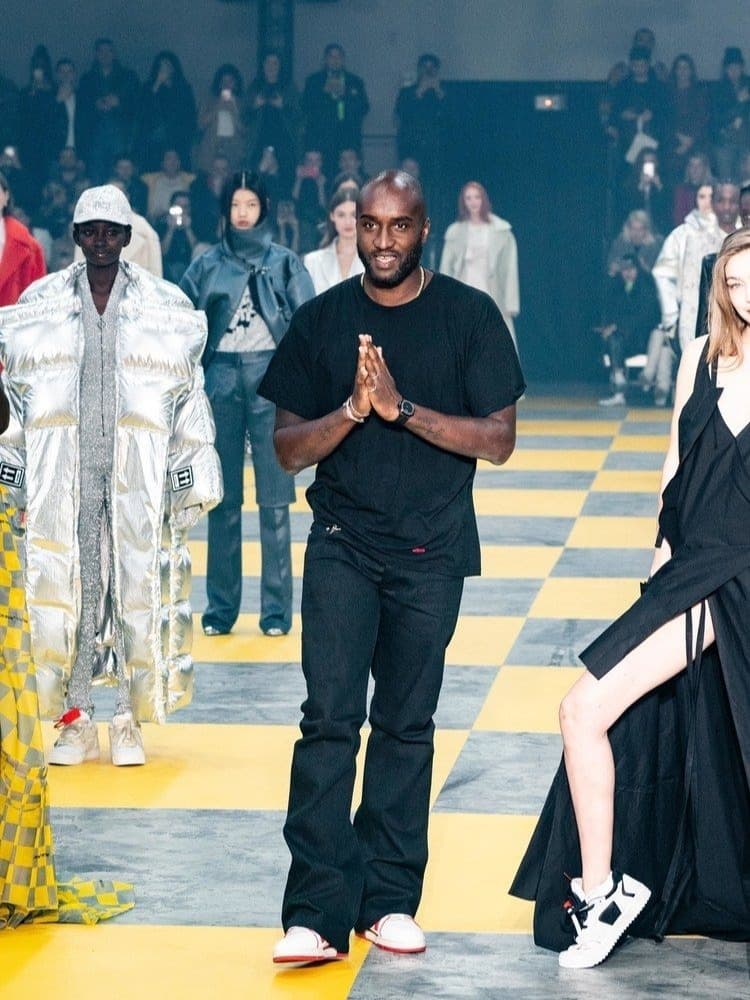
Virgil Abloh transformed the definition of luxury and who could belong to it. The son of Ghanaian immigrants from Rockford, Illinois, he rose without formal training to become the first African American artistic director of a French luxury fashion house and the founder of Off-White, the Italian streetwear label that changed global aesthetics.
In “Make It Ours: Crashing the Gates of Culture With Virgil Abloh,” Robin Givhan chronicles his journey and how his rise forced the industry to evolve. Abloh’s presence itself challenged boundaries, legitimizing street and hip-hop culture in high fashion.
Remixing Fashion Like Music
Drawing from his DJ roots, Abloh approached design as remixing — cutting, rearranging, and transforming previous works. He called it his “3% rule,” claiming that a 3% alteration created something new. This concept inspired creativity but also sparked legal battles over copyright and trademarks.
His first experiment, a simple Pyrex Vision T-shirt priced at over $500, marked his entrance into fashion as a “maker,” not merely a designer. As Givhan notes, Abloh built meaning around his brand first — then filled it with products, reversing traditional logic in luxury fashion.
From Critic to Chronicler
Givhan, once a skeptic of Abloh’s approach, later recognized his broader cultural impact. After nearly three decades at The Washington Post, she shifted her focus to deeper explorations of culture, leaving the newspaper in August after accepting a buyout.
“It felt like an opportunity to move on and devote myself to books or new projects,” she said.
Architecture, Music, and Method
The book’s excerpt traces Abloh’s academic path — from civil engineering at the University of Wisconsin to architecture at the Illinois Institute of Technology. Influenced by Mies van der Rohe’s modernism, Abloh found in architecture a bridge between logic and creativity. His education taught him presentation, confidence, and the ability to defend ideas — skills that later shaped his fashion career.
Professor Frank Flury, who taught Abloh, recalls his unusual flair. “He wasn’t the top designer, but his compositions were always visually fascinating,” Flury said. “He designed differently.”
A Practice, Not Perfection
Abloh never planned to work as an architect, but he embraced its process of problem-solving and experimentation. He saw fashion as an evolving “practice” — a space to apply theories and test ideas. “Everything is a work in progress,” he believed — and through that philosophy, he redefined creativity for a generation.