The world’s fashion capital has once again proved that reinvention never goes out of style. As Paris Fashion Week draws to a close, the industry is buzzing with anticipation — and a touch of anxiety. Four of the biggest names in luxury — Balenciaga, Chanel, Dior, and Loewe — have unveiled fresh creative directions, signaling the start of a new era for high fashion.
This season’s shows mark a generational shift in the industry. Each of these powerhouse brands introduced a new designer, giving the public and investors alike a glimpse into the future of couture. After several years of flat or declining sales, creative renewal has become the luxury world’s most powerful growth strategy. As Morningstar analyst Jelena Sokolova explains, “One of the self-help levers for brands is increased creativity or a change in creative direction. It’s all about gaining market share — and creativity can make the difference.”
A Bold New Chapter for Dior
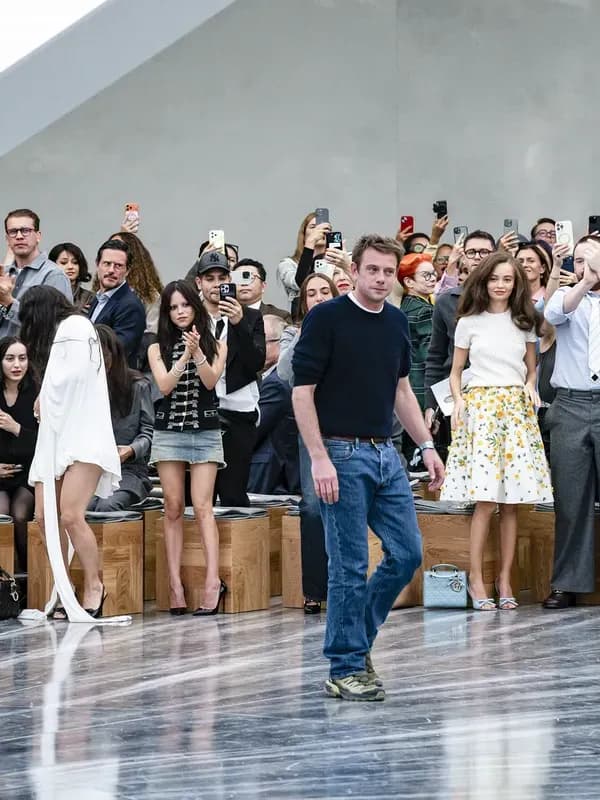
The week opened with Jonathan Anderson’s debut women’s collection for Dior, a moment that drew both excitement and scrutiny. Known for revitalizing Loewe, Anderson brought his signature mix of classic elegance and playful irreverence to Dior’s runway. The collection balanced opulence and wearability: sculpted bows, flowing capes, and dramatic evening gowns were offset by denim mini-skirts and practical handbags.
The fashion world was divided. Simon Longland, head of fashion buying at Harrods, praised Anderson’s approach as “a bold new chapter for the 78-year-old house,” while The New York Times described it as “unfocused.” But even mixed reviews underline one truth — Dior’s creative engine is alive and evolving.
Loewe Redefines Modern Craft
Anderson’s former brand, Loewe, took the spotlight two days later under its new creative duo Jack McCollough and Lazaro Hernandez, best known for their work at Proenza Schouler. Their debut offered a vibrant vision: brightly colored leather jackets, sculptural tops, and feather-light strapless dresses.
The duo’s approach fused architectural precision with playful sensuality, reminding audiences why Loewe remains one of the most innovative houses within LVMH Moët Hennessy Louis Vuitton SE. Their show celebrated craftsmanship with a youthful edge — a sign that the Spanish heritage brand is entering a daring new phase.
Balenciaga’s Experimental Edge
Next came Balenciaga, where Pierpaolo Piccioli, formerly of Valentino, presented his first collection for the iconic French label. His runway was a striking juxtaposition of contradictions — platform velvet flip-flops paired with evening gowns, bomber jackets layered over cropped leather tops.
Piccioli’s Balenciaga blurred the line between couture and chaos, blending sculptural silhouettes with unexpected textures. His aim was clear: to preserve the avant-garde legacy of the brand while softening its image after years of controversy. The result was ambitious, expressive, and unapologetically experimental.
Chanel’s Anticipated Reinvention
As Paris Fashion Week wrapped up, all eyes turned to Matthieu Blazy, the former Bottega Veneta designer, making his much-awaited debut at Chanel. The question on everyone’s mind: how would he reinterpret the brand’s most iconic codes — tweed suits, pearls, and soft femininity — for a new generation?
While details remained closely guarded before the show, insiders expected Blazy to blend Chanel’s refined heritage with his signature architectural minimalism. His challenge was monumental: to modernize a global institution without diluting its timeless elegance.
The anticipation surrounding Blazy’s collection reflected more than curiosity — it revealed how much the industry craves a creative reboot amid a slowing market.
A Turning Point for the Luxury Sector
The timing of these creative shifts is no coincidence. The luxury industry faces its toughest year since the global financial crisis, with consulting firm Bain & Company forecasting a contraction of up to 5% in 2025 after flat performance in 2024. Shares of LVMH are down about 15% this year, and Kering SA, the parent company of Gucci, Balenciaga, and Saint Laurent, remains far below its 2021 highs.
In a market where growth depends increasingly on storytelling and emotional connection, bold design changes are a lifeline. Paris Fashion Week, once a showcase of predictable elegance, has become a testing ground for reinvention.
Gucci’s Parallel Reinvention in Milan
Just before the Paris shows, Gucci made waves in Milan by introducing a new creative director after three years of declining sales. While veteran designer Demna Gvasalia skipped the runway this season, the brand’s social media feeds exploded with new imagery — models in minimalist silhouettes paired with vintage accessories such as the bamboo handle bag.
The house also premiered a short film about a fictional, dysfunctional Gucci family starring Demi Moore, blending humor and self-awareness. As Demna told reporters, “We all try to be perfect — perfect son, perfect designer — but perfection doesn’t exist.” It was a fitting metaphor for an industry chasing renewal amid uncertainty.
The Creative Reset
What links Dior’s bows, Loewe’s sculptural cuts, Balenciaga’s contradictions, and Chanel’s mystery is not nostalgia, but momentum. Paris Fashion Week 2025 underscored that the future of fashion belongs to those who dare to rethink heritage. For luxury houses, change isn’t a risk anymore — it’s survival.