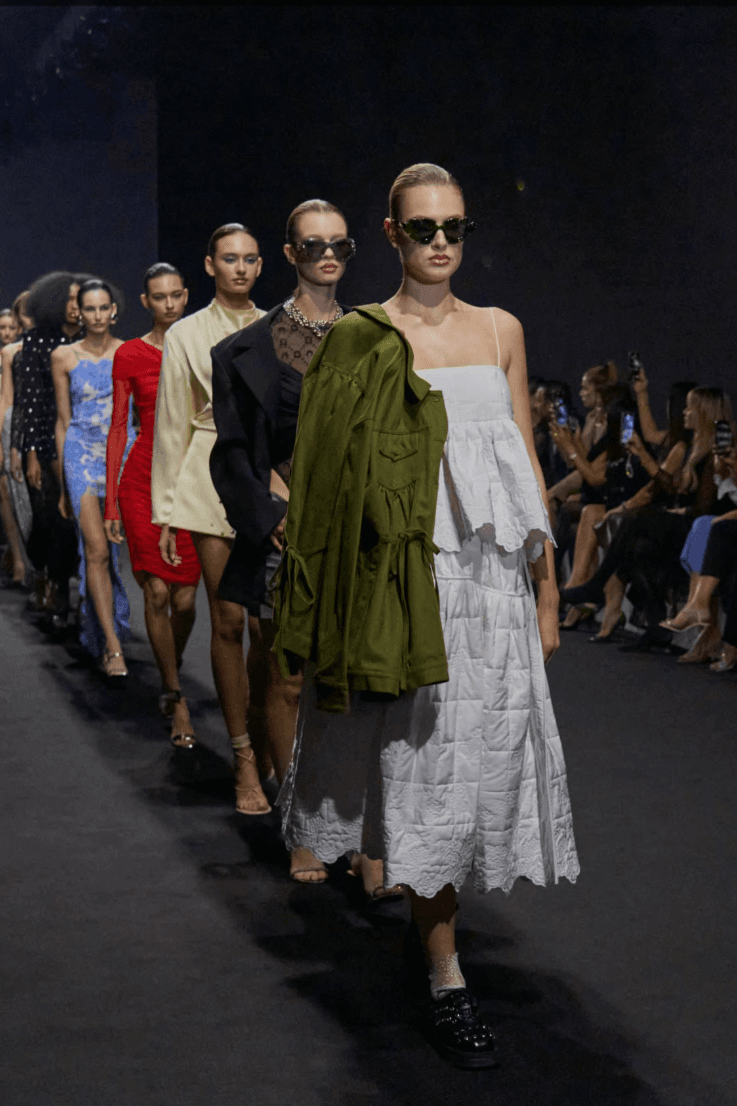
Emirates Fashion Week 2026 will take place from April 23 to April 26 in Dubai, bringing together emerging designers, international brands, and industry professionals in one of the region’s most commercially driven fashion platforms. Hosted in Dubai Media City, the event reflects a new model of fashion weeks. It is not built only around prestige. It is built around access, visibility, and market positioning.
Unlike traditional fashion capitals, where entry is tightly controlled, Emirates Fashion Week offers a more open structure. Designers can apply to participate, but entry comes with clear requirements and a significant financial commitment. For brands, participation typically starts from around 10,000 USD and can increase depending on show format, timing, and additional services. This cost covers production elements such as runway setup, lighting, backstage coordination, and overall show management. However, what brands are really paying for goes beyond production. The event creates an environment where collections are presented directly to media, influencers, and potential buyers. Photographers, content creators, and digital platforms turn each show into a stream of content that can extend far beyond the runway.
Networking is another core component. Designers are placed within a space where they can connect with stylists, partners, and regional stakeholders. For many, this is an entry point into the Middle Eastern fashion market. Dubai adds strategic value to this positioning. The city attracts a global audience with high purchasing power and serves as a bridge between Europe, Asia, and the Middle East. Access for visitors follows a different structure.
Ticket Access and Entry
Visitor entry is limited and positioned as premium. Tickets typically range between 1800 AED and 2200 AED per day, depending on the level of access and seating. At the same time, a large portion of attendees enter through invitation. Buyers, stylists, influencers, and media are prioritized, creating a hybrid model that is both open and selective. This structure defines the event. Emirates Fashion Week is not purely exclusive, but it is not fully public either. It operates as a controlled environment where access is either earned through industry relevance or purchased. Despite the opportunities, participation carries risk. Visibility is not guaranteed, and many brands face challenges turning exposure into long term growth. This reflects a broader shift in the fashion industry. Traditional fashion weeks offer access and visibility, but they do not determine what gains traction. In a digital environment, attention is shaped by audience response, not just by presence on a runway.