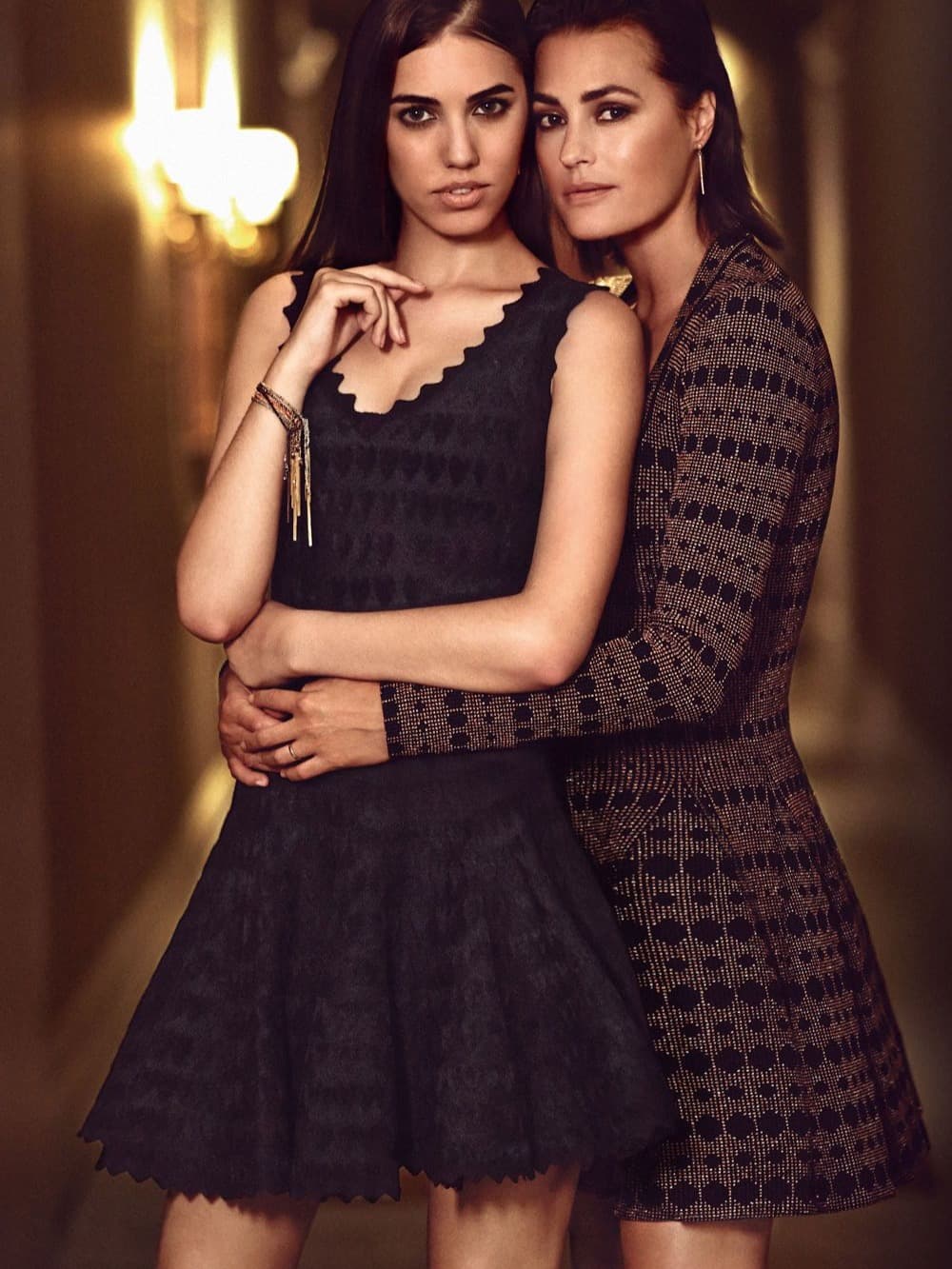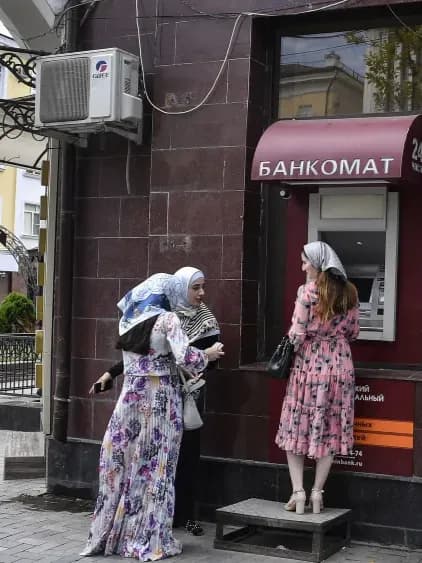
In most countries, women wearing tailored jackets, structured coats or traditionally “masculine” details attracts little attention. In the Russian republic of Chechnya, that is no longer the case. Local authorities have formally advised against clothing that includes what officials describe as “masculine elements,” a move that has sparked criticism from legal and fashion experts alike.
“Masculine Details” Now Off-Limits
Among the items singled out are gazyrs — ornamental cartridge holders traditionally worn on historical Caucasian garments. Once symbolic rather than functional, they are now discouraged by the Chechen Ministry of Culture, which claims such elements clash with local customs and cultural values.
At the same time, women have been publicly urged to wear headscarves. Last month, a regional official, Amir Sugaipov, took to social media to warn women that appearing without a head covering could result in so-called “explanatory conversations” with authorities.
From his perspective, the headscarf is presented not as a political demand, but as an aesthetic and moral ideal. According to his statement, covered hair reflects dignity, beauty, and respect for local tradition.
Legal Experts Call the Measures Alarming
Stanford Law School professor Richard Thompson Ford described the situation as disturbing, but unfortunately familiar. Similar restrictions exist in other regions, including Iran, where dress codes are enforced by religious police.
Ford, author of Dress Codes: How the Laws of Fashion Made History, explained that while modesty rules are often justified in religious terms, the deeper function is different. These rules, he argues, are often tools used to regulate women’s freedom for male benefit rather than spiritual reasons.
He draws a clear distinction between personal faith and forced compliance. Choosing religious clothing freely is one thing; imposing it through authority and coercion, he says, represents the opposite of religious freedom.
When Clothing Becomes a Political Statement
Susan Scafidi, founder of The Fashion Law Institute, believes these restrictions go far beyond wardrobe guidance. She views them as a direct interference with freedom of expression and religious choice.
According to Scafidi, clothing is not merely fabric. It is language. It communicates values, identity, and belonging. Forcing coverage, she says, is similar to silencing someone without physically removing them.
She also challenged the idea that certain garments possess inherent gender. Labeling details as “masculine,” she explained, is not about tradition but about power. It reinforces who holds authority and who is expected to submit.
Dress Codes as Instruments of Control
Scafidi pointed to global examples where clothing has been used politically, from pressure on political leaders’ appearance to proposed restrictions on drag performances in parts of the U.S., and even new behavioral campaigns for airline passengers.
Depending on who holds power, she warned, social rules can quickly slide toward extremes — whether enforcing total coverage or banning modest clothing altogether. Fashion, she argues, becomes a battleground for ideology.
She concluded with a reflection: personal freedom of dress is something many people rarely question — until it vanishes.
The Loss of Fashion as Self-Expression
Drexel University professor Joseph Hancock described the restrictions as an attempt to take away cultural power from women. When people redefine clothing norms, he says, they challenge social structures. Removing that ability is a form of control.
Hancock went even further, linking the situation to wider political attitudes toward gender identity and sexuality in Russia. In his view, fear and intolerance continue to shape policies that suppress individual identity through regulation.
Yet even in a story dominated by loss, he pointed to progress elsewhere. Anti-discrimination laws like the CROWN Act in the U.S. signal that legal systems can move toward protecting personal appearance instead of policing it.
For Hancock, these victories matter. They serve as reminders that personal style is not superficial — it reflects dignity, autonomy, and the right to be seen as oneself.