Throughout US history, the fashion of First Ladies has mirrored the evolution of the nation itself — revealing changing ideals of femininity, politics, and diplomacy. With the release of Michelle Obama’s new book The Look, attention once again turns to how the wardrobes of these influential women have shaped perceptions of leadership and cultural identity.
Obama, who served as First Lady from 2009 to 2017, has said her clothing choices were never random. “I thought about what I wanted to say with my fashion,” she explained. For her, style was a tool for inclusion, diversity, and opportunity.
The Origins: Martha Washington and Dolley Madison
The first First Lady, Martha Washington, set the tone for the role. Rejecting royal excess, she dressed in fabrics made in the United States as an act of patriotism. Her modest, matronly attire reflected dignity and restraint — a fitting image for the “mother of the nation.”
Her successor in influence, Dolley Madison, redefined the role with flair. Known for her turban hats and elegant gowns, Madison was one of the first “fashionista” First Ladies. Her style and charm became political tools, enhancing her husband’s presidency and reshaping social customs in early Washington.
Redefining Womanhood: Mamie Eisenhower and Jackie Kennedy
In the 1950s, Mamie Eisenhower embodied postwar domestic ideals. Famous for her love of pink — later dubbed “Mamie pink” — she favored Dior-inspired silhouettes and classic accessories. Her relatable, conservative look symbolized the return to traditional gender roles after World War II.
Then came Jackie Kennedy, whose timeless elegance transformed the First Lady into a global fashion icon. Working with designer Oleg Cassini, she introduced an American take on European chic: pillbox hats, clean lines, and understated glamour. Kennedy used style as diplomacy, elevating America’s image abroad.
The Politics of Glamour: Nancy Reagan and Hillary Clinton
The 1980s brought Nancy Reagan, whose wardrobe mirrored the opulence of her era. Dressed by designers like Galanos, Herrera, and Valentino, she embraced bold luxury — often in her signature “Reagan Red.” While celebrated for her sophistication, her extravagance also drew criticism during economic hardship.
By contrast, Hillary Clinton redefined First Lady fashion in the 1990s. Her trademark pantsuits and practical headbands symbolized professionalism and equality, reflecting her dual role as political partner and policymaker. Clinton’s style represented a new balance between femininity and power.
Redefining Accessibility: Michelle Obama
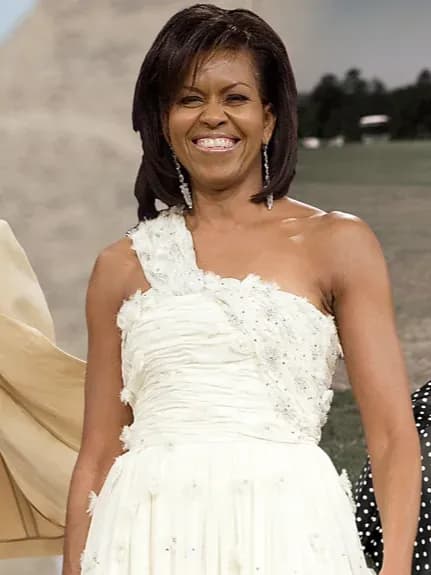
Michelle Obama blended elegance with approachability. She wore both designer gowns and affordable brands like J.Crew and Target, championing diversity in fashion while supporting emerging American designers. Her style was modern, inclusive, and expressive of self-confidence.
Obama also used fashion to navigate racial representation. From embracing her natural hair post–White House to enduring public scrutiny for sleeveless dresses, her wardrobe sparked dialogue about identity and standards for women in power.
Modern Symbolism: Melania Trump
Melania Trump’s sharp tailoring, military-inspired coats, and luxury ensembles continued the tradition of First Lady fashion as communication. A former model, she understood the visual impact of dress, often speaking through her style more than her words.
While admired by some for her elegance, her fashion also stirred controversy — notably the “I really don’t care, do u?” jacket worn in 2018. Her choices, like those before her, reflected the tensions between glamour, message, and public perception.
The Legacy of First Lady Fashion
From Martha Washington’s patriotism to Michelle Obama’s inclusivity and Melania Trump’s high fashion, First Ladies have used clothing as both armor and statement. Their looks continue to define eras, challenge expectations, and shape America’s visual legacy of power and identity.