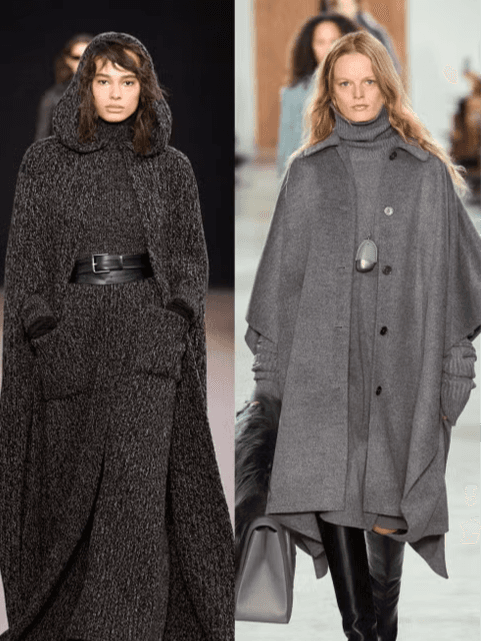
Less than a decade ago, the hierarchy of the fashion industry was absolute and immovable. Trends were born in the exclusive ateliers of Paris and Milan, rubber-stamped by the editors-in-chief of glossy magazines, and eventually trickled down to the mass market six months later. It was a dictatorship of taste: strictly "top-down."
Today, that pyramid has been completely inverted. A teenager recording a video in their bedroom on TikTok can ignite a global trend faster than a creative director at a luxury fashion house can sketch a design. Welcome to the era of UGC (User-Generated Content)—an era where the consumer is also the creator.
The End of the "Perfect Image"
Why has UGC become the primary currency in the fashion world? The answer lies in the shifting psychology of the modern consumer. We have reached a saturation point with unattainable perfection. Highly polished magazine covers and heavily retouched advertising campaigns no longer trigger the desire to purchase; instead, they trigger skepticism.
User-Generated Content is the antithesis of the glossy editorial. It features real people with different body types, heights, and complexions, showing how clothing looks in everyday life rather than under the flattering lights of a professional studio.
Market research supports this shift with staggering numbers: over 79% of consumers admit that UGC significantly impacts their purchasing decisions. Why? Because it serves as ultimate social proof. When we see a garment on someone who looks like us—rather than a sample-size model—the barrier of distrust crumbles. Authenticity has become the new luxury.
TikTok and the Birth of Micro-Trends
Social platforms, particularly TikTok and Instagram, have acted as catalysts for the speed of fashion. Historically, trends lived by seasons (Spring/Summer, Autumn/Winter). Today, thanks to UGC, we live in the age of "micro-trends," where the lifecycle of a style might last only a few months or even weeks.
Consider recent cultural phenomena like Cottagecore, Old Money Aesthetic, Y2K revival, or the Mob Wife Aesthetic. None of these styles were concocted in a boardroom as a marketing strategy. They were born in user feeds. Hashtags like #OOTD (Outfit of the Day) create an endless stream of inspiration where every user becomes a stylist for millions of others.
Brands no longer dictate what we wear. Their new role is to keep up with what users have already decided to wear and adapt their supply chains accordingly. This phenomenon, often termed "Ultra Fast Fashion," is entirely fueled by the content consumers create and share.
UGC as a Business Strategy: Beyond the Repost
For fashion brands, utilizing user content is no longer just a "nice-to-have" bonus; it is the foundation of a modern marketing funnel. Integrating customer photos and videos solves three critical business challenges:
- Reducing Return Rates: This is the plague of fashion e-commerce. When a shopper sees a dress only on a professional model, expectations often fail to meet reality. Video reviews from real customers (such as Haul videos) provide an honest representation of fabric movement, fit, and color accuracy.
- Skyrocketing Engagement: Social media algorithms are increasingly penalizing overt, polished advertisements. However, raw, lo-fi video content—like an unboxing filmed on a smartphone—generates organic reach. Brands that leverage UGC typically see a 6.9x increase in engagement compared to brand-generated content.
- Community Building: Retail giant ASOS was a pioneer in this space with their #AsSeenOnMe campaign. When a brand features a customer’s photo on their product page or social feed, it creates a powerful emotional bond. The customer stops being just a wallet and becomes a co-creator and ambassador for the brand.
The Evolution of Influence: From Celebrity to "The Girl Next Door"
A seismic shift has also occurred in influencer marketing. The era where brands paid millions to A-list celebrities for a single posed photo with a handbag is fading. Consumers are savvy; they know that Selena Gomez or Kim Kardashian likely do not wear mass-market fashion in their daily lives.
Enter the era of UGC Creators and Nano-Influencers. These are individuals with followings ranging from 1,000 to 10,000, whose content feels incredibly native and relatable. Their recommendations are perceived not as ads, but as advice from a friend. For the fashion industry, this is a goldmine: trust levels are higher, and integration costs are lower. Often, brands can simply gift products in exchange for an honest review, generating content that converts sales far better than a high-budget commercial.
The Double-Edged Sword
However, the dominance of UGC in fashion has a dark side. The frantic pace of trend turnover dictated by social media fuels overconsumption. The pressure to debut a new outfit for every TikTok video has birthed a culture of disposable clothing.
Yet, paradoxically, UGC is also the primary tool for the counter-movement: sustainability. Hashtags dedicated to vintage shopping, upcycling (repurposing old clothes), and "thrifting" are garnering billions of views. This proves that while users have the power to accelerate the machine of consumerism, they also have the power to slow it down, promoting a more circular fashion economy.
Conclusion
The role of UGC in shaping fashion trends cannot be overstated. We have transitioned from a brand monologue to a community dialogue. Today, to be fashionable, one doesn't need to buy Vogue—one simply needs to open their "For You" page.
For businesses, the lesson is clear: if you want to sell fashion in 2025 and beyond, stop relying solely on models. Hand the camera to your customers. This shift is exactly why innovative ecosystems like LookBerry are gaining momentum—they don't just display clothes; they turn every user into a potential ambassador, blurring the line between social networking and e-commerce.
The consumer's voice now carries further than any slogan you can write. The future of fashion isn't about what hangs on the racks of a boutique; it’s about how real people style it on the streets, in their feeds, and on the platforms that celebrate their unique taste.